Material handling must be an essential issue, regardless of industry. From one location to another, any example where materials need to be move, whether to manufacture, sell or use products involves the appropriate equipment.
In the workplace, because the misusing of materials is the biggest cause of accidents and injuries, whenever workable, using mechanical methods that include various equipment comes with wire rope that helps to handle a heavy load. Most accidents can prevent, with the appropriate equipment.
Several of the most popular kinds of material handling equipment involve cranes, powered industrial trucks, derricks, hoists, and conveyors. It is a must to use slings to hold the suspended loads when utilizing cranes, derricks and lifts to transfer material. This makes slings some of the most utilized materials handling equipment available.
SELECTING A PROPER LIFTING SLING
Based on their planned use, no one size suits all solutions to lifting slings, and slings must be chosen. Involving the size and kind of load, as well as the environmental conditions of the workplace, selecting an appropriate sling depends on many factors.
By their inspection methods, there is a range of sling kinds that we can categorize into three main groups as influenced: wire rope and mesh, chain, and fibre rope web.
We will focus on the qualities of wire rope slings that help you to define whether these are perfect for your application.
TYPES OF WIRE ROPE SLINGS
Option for material handling, wire rope slings, also mentioned as wire cable slings, have always been common.
In industrial applications, they are sturdier than nylon slings and polyester webbing slings and have higher temperature limits, an essential concern.
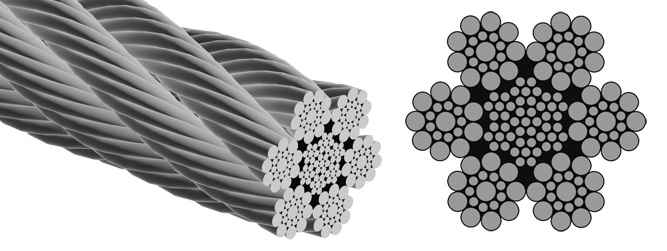
For a sound rope, these slings are made from individual wires that have been distorted to form elements; these strands are then twisted all together. Sometimes wire rope slings have a fibre core to provide them more elasticity. To environmental harm, this extra suppleness may compromise the sling’s resistance.
You must think of strength, capability to bend without distortion, capability to withstand abrasive wear, and capability to withstand the abuse when selecting the right lifting sling.
Before requiring an alternative, a durable sling is safest and more cost-efficient, as slings that can withstand the demands of industrial lifting will last much longer.
Strength
Strength defines by size, grade, and construction. A sling must be capable to accommodate the largest used load. A sling’s strength is diminished, with constant thorough service. To make sure it is appropriate, older slings should inspect before use.
Fatigue
Without experiencing exhaustion, a wire rope must be capable to survive repetitive bending. From repetitive applications of twisting loads, fatigue failure happens, when the wires experience small crack development.
Abrasive Wear
A wire sling’s capability to withstand abrasion will differ in its size, the number of wires, and the construction of the rope. To abrasion quite as well, a rope made with smaller wires will have more elasticity but won’t stand up.
Abuse
Before other reasons, the abuse or misuse of a wire rope sling will trigger it to fail. To find the most out of your slings, make sure you use them safely and correctly, per the manufacturer’s suggestion.
Conclusion: There are different types of characteristics of wire rope that will have various advantages. It requires using slings to hold the suspended loads when utilizing cranes, derricks and lifts to transfer material.
 romaenterprises